Water in the Apiary: Real Needs and Waterers That Actually Work
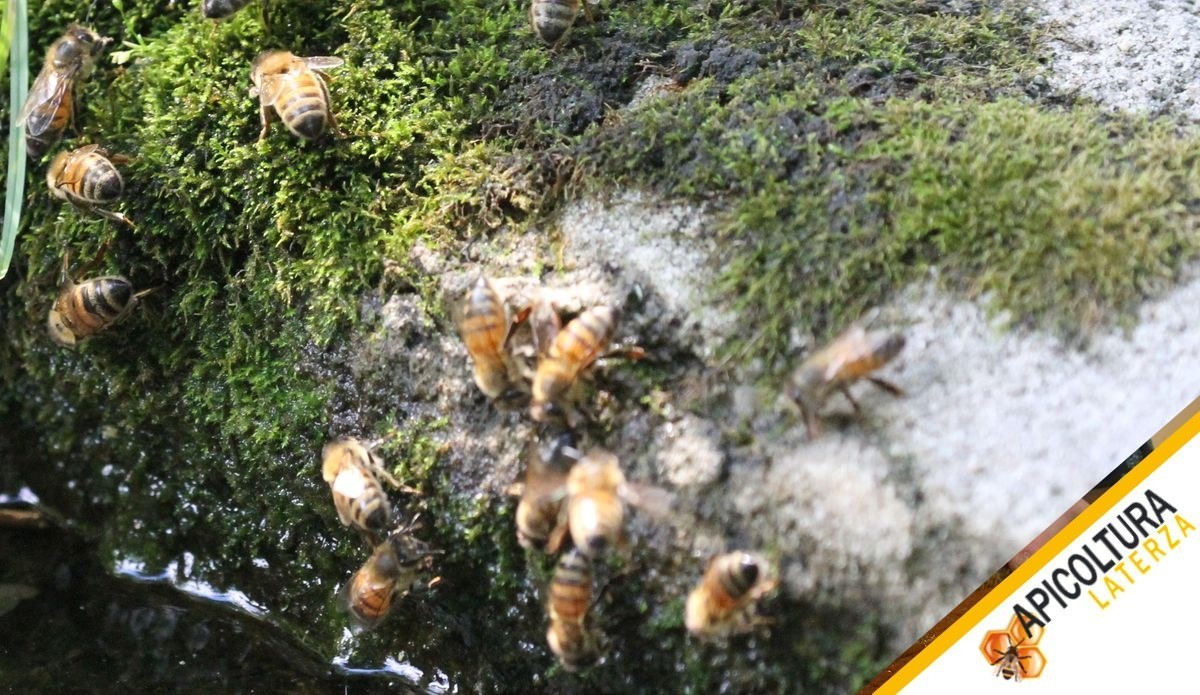
How much water does a bee colony really drink at the height of summer, and why does a randomly placed waterer often stay untouched while foragers crowd the neighbor's pool? This article moves from theory to practice: real data on a colony's water needs, the materials that keep bees from drowning, where to place the water source, and why it needs to be set up before the heat arrives, not after the first complaint.
Every country beekeeper has the same July story: the phone rings, a neighbour is furious because ten bees are paddling in their swimming pool. It is not an invasion, it is thirst. The real question is not why bees look for water, we already know that: it is how much they actually need, and why the waterer sitting in a corner of the garden often stays untouched while foragers crowd the edge of someone else's pool.
How much water a colony really drinks
The most quoted figure comes from a 1973 Arizona study by Standifer and colleagues: at the peak of the season a colony consumes on average between 5 and 9 litres of water a week, roughly a litre a day in hot weather. In winter that drops to about a litre a week, a tenth of the summer figure. An independent trough test run by Randy Oliver on three colonies during a heatwave above 40 degrees Celsius measured an average of about two thirds of a litre per colony per day, net of evaporation from the trough: a number consistent with the Arizona study.
Popular references such as Kim Flottum's The Backyard Beekeeper put it simply: a summer colony needs at least a quart, roughly a litre, of water a day, and more as temperatures climb. Our earlier piece on why bees need water and what their basic requirement is covers the biology behind that number; this article is the practical half, how to actually supply it without losing bees or a friendship with the neighbours.
The figure is never fixed. It depends on how much brood needs feeding and cooling, on outside temperature, on how watery the available nectar already is (a wet spring nectar flow lowers the need for extra water in larval food) and on colony size. A strong colony in late June can drink twice as much as a young one started in May.
The real problem is not thirst, it is drowning
A bowl of plain water with nothing to land on is a trap. Surface tension holds a bee's weight only until it tries to move: one wrong step wets the wings, the bee cannot pull free, and it drowns within minutes. That is why so many well-meant homemade waterers end up surrounded by dead bees instead of drinking ones. The issue is almost never how much water is offered, it is the shape of the container.
Materials that actually work
A wide, shallow container always beats a deep, narrow one. Inside it, bees need landing points that stay above the waterline: stones of different sizes, wine corks, small twigs, glass marbles, or a sheet of foam cut a couple of centimetres smaller than the container so it floats and acts as a raft bees can walk on to reach the edge. The principle is always the same: a bee must be able to land, drink and leave without ever having to swim.
The sloped-board method
At the Harry H. Laidlaw Jr. Honey Bee Research Facility at UC Davis, one of the most serious bee research centres anywhere, water is offered on a sloped wooden board propped against a slowly dripping tap: a thin continuous film of water runs down the rough surface, and bees drink while walking on the dry part of the board next to the wet line, never at risk of falling in. A similar setup is used at the same university's Haagen-Dazs Honey Bee Haven. You do not need a dripping outdoor tap to copy the idea: tilt a piece of rough, unpainted wood inside a shallow basin and keep only the lower end wet, topping it up daily.
Where to put it: close, but not too close
The usual advice is 5 to 10 metres from the hive, never right in front of the entrance where forager traffic would get in the way. A spot with some shade for part of the day cuts evaporation and keeps the water from overheating exactly when bees need it coolest.
One detail many beginners miss: bees do not find water by sight, they find it by scent, and they tell the rest of the colony the direction using the same dance language they use for nectar. If the source sits too close to the hive, that dance loses precision and new foragers struggle to be pointed in the right direction. That is why some beekeepers prefer placing the waterer 30 metres or more away when space allows: further in large apiaries, closer when land is tight. There is no single correct distance, only a distance that gets in the way of the colony's own communication.
What makes it genuinely attractive
As explained in our water-requirement article, bees are not looking for the cleanest water but for the one richest in dissolved minerals, which is why a muddy puddle beats a garden tap. A pinch of coarse sea salt dissolved in the water, or a few drops of natural vinegar, makes a waterer far more interesting than plain tap water, especially in the first weeks while the colony is still learning where it is.
Once they find it, do not move it
Foragers memorise a water source by scent and keep returning to it day after day for as long as it stays available. Moving the waterer once the season has started, even by a few metres for convenience, disorients bees that keep looking for it in the old spot: better to pick the final position the first time, even if that means an extra site visit before filling it.
Hygiene: it must not become a mosquito nursery
Still, lukewarm water rich in organic matter is ideal for bees, but it is also exactly what mosquitoes look for when laying eggs, which can happen within days. Water should be refreshed often, especially in summer, and the container scrubbed once a week with a simple brush and hot water, no bleach or detergent: chemical residue drives bees away far faster than salt attracts them.
Why bees end up in the neighbour's pool
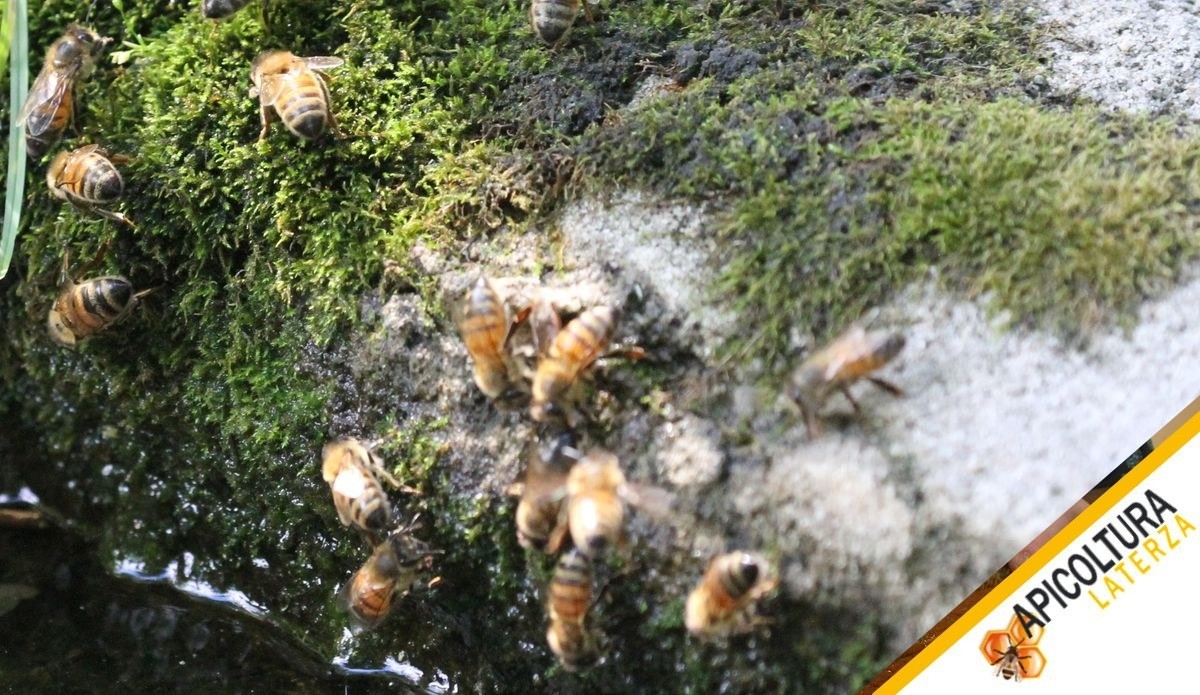
Eric Mussen, extension apiculturist at the University of California, summed it up in a line worth remembering: always provide water for your bees on your own property, otherwise they will visit the neighbour's hanging laundry, bird bath, swamp cooler, dog dish or a leaky hose connection. The pool is simply the biggest, most visible version of the same problem: usually just three to ten bees at a time, drinking at the edge with no aggressive intent whatsoever. Chlorine, contrary to what many expect, does not repel them; its smell can actually attract them, along with the dissolved minerals in pool water.
Prevent it, do not fix it after the first complaint
An often underrated detail: once foragers have learned the route to a neighbour's pool, changing it is not quick. According to North Carolina State University Extension, an alternative water source needs to stay active for weeks, not a couple of days, before bees reliably switch over; adding a little sugar to the water in the first week speeds up adoption, but there is no fast fix once the path is already established. The practical conclusion is simple: set the waterer up in early spring, before the heat sends foragers exploring the neighbour's garden, not after the first angry phone call. Beekeepers working in urban or semi-urban settings will find the full picture on local rules and good-neighbour practice in our piece on urban beekeeping and good neighbours: that article covers siting in general, this one is specifically about water, but the two almost always travel together.
How many water points, and how big
For a small apiary of a few colonies, one well-placed waterer is enough, as long as it is checked daily during the hottest stretches: with many foragers queuing, a small container empties within hours. In larger apiaries with dozens of colonies, it pays to spread two or three water points apart from each other, so traffic is not all funnelled into one spot and a single undersized source does not still push a few foragers to look elsewhere.
Winter need does not disappear, it shrinks
Through the cold months consumption drops sharply, as the Arizona winter figures show, but it never reaches zero: the winter cluster still burns stores and produces condensation that bees partly reuse. Readers of our piece on wintering bees and preparing the hive for the cold season already know that attention in this period shifts to honey stores and internal humidity, not to the outdoor waterer, which freezing weather makes useless anyway: that is normal and needs no special action.
Three mistakes that cost a colony or a friendship with the neighbours
The first is offering water with nothing to land on: good intentions turn into a drowning trap. The second is moving the waterer once the season is under way, disorienting foragers that keep returning to a spot that no longer has anything to offer. The third, by far the most common, is waiting for the first complaint before acting: by then the bees have already learned the way to the pool, and it will take weeks of patience, not an afternoon, to bring them home.
The five-point checklist before the heat arrives
Before temperatures climb, five things are worth checking: the container is wide and shallow, with stones, cork or a floating raft inside; the position is a few metres from the hive, never in front of the entrance, with some shade during the hottest hours; the water is changed often and the container cleaned weekly with no chemicals; a pinch of salt or a few drops of vinegar make it more appealing than plain tap water; and above all, it is already in place before the heat sends foragers looking elsewhere. Five minutes of preparation in March are worth more than any apology phone call in July.
Before the waterer, you need a healthy colony
A perfect waterer does little good if the colony drinking from it is weak or started too late. We raise and select nucs, full colonies, package bees and queens ready to take on summer. Tell us where your apiary is and what you need: we will tell you what makes sense and when we can deliver it.
In Same Category
- Flowering Calendar: Planning the Year on Your Own Flight Radius
- Contract Pollination: How the Service Works for Growers
- Pollen and Propolis: What You Need to Harvest Them and When It Pays
- Urban Beekeeping: Rules, Siting and Good Neighbours for Keeping Bees in the City
- Wildflower, Monofloral or Honeydew: How to Tell Honeys Apart and Choose the Right One