Swarming: Recognising the Signs and Managing It in Spring
Spring arrives and the hive fills with bees. It is the finest season, but also the season of swarming: here is how to recognise the signs in time, above all the queen cells, and manage it without losing half the colony.
Spring arrives and the hive changes gear. The days grow longer, the queen lays at full pace, the nurse bees work without pause, and in a few weeks the colony goes from a few thousand bees to tens of thousands. It is the finest season of the year, but it is also the one in which the beekeeper must watch most closely for an event as natural as it is tricky: swarming.
Beginners often experience it as a surprise. In truth, swarming never really comes out of nowhere. The colony sends signals, and learning to read them in time is half the job.
What swarming is and why it happens
Swarming is the natural way a honey bee colony reproduces. Not at the level of a single bee, but of the whole colony: the hive splits in two. The old queen leaves with a large share of the workers to found a new nest elsewhere, while the original hive keeps the brood, the stores and a new queen on the way.
It is an ancient instinct, healthy from the point of view of the species. For the beekeeper, however, it means losing half the bees and much of the productive capacity in a single moment, right at the start of the honey season. That is why it pays to understand it and, whenever possible, prevent it.
What drives a colony to swarm
Behind the decision to swarm you almost always find the same factors, often combined.
The first is crowding. When brood fills every frame and the bees can no longer find free cells for the queen to lay in, the nest comes under pressure. The second is a blocked nest: if honey and pollen fill the brood space, the queen has nowhere left to lay and the colony feels saturated.
Then there is the queen factor. An older queen produces less pheromone, and that pheromone is exactly the signal that keeps the colony cohesive and holds back the swarming instinct. The less pheromone circulates, the more the workers begin to think about a new queen. Finally the season itself matters: a spring rich in nectar and pollen, with many nurse bees and plenty of brood, creates the ideal conditions for the instinct to switch on.
The signals to recognise in time
This is the heart of the work. A colony preparing to swarm tells you, if you know where to look.
The most important signal is queen cells. During the inspection, check the lower edges of the frames above all: if you find elongated, peanut-shaped cells pointing downward, the colony is raising new queens. They should not be confused with emergency cells, which appear when a colony is suddenly left queenless; swarm cells are numerous and arranged along the margins of the comb.
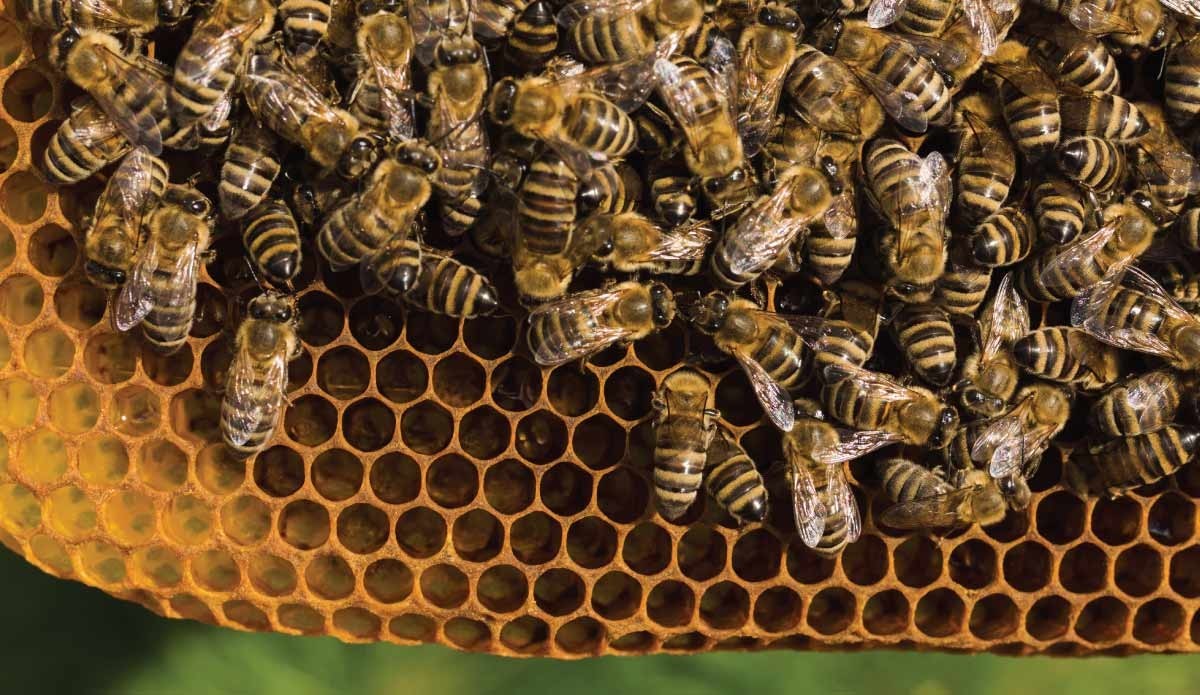
There are other clues too. The nest looks congested, with bees packed everywhere and little free space. In many cases you notice a slowdown in laying, because the workers feed the queen less to slim her down and prepare her for flight. And on warm days you may see clusters of idle bees on the landing board and under the hive, what beekeepers call bearding: on its own it is not proof, but added to queen cells it is a clear warning bell.
What to do when you find queen cells
Finding queen cells already capped means you are late: the swarm can leave at any moment, often as soon as the first cell is ready. But even then something can be done.
The strategy most used by beekeepers is artificial swarming, that is, getting ahead of the bees by splitting the colony yourself before it does. In practice you take a few frames of brood and bees, with or without the queen, and form a separate nucleus. The original colony, feeling less crowded and without the old queen, loses the urge to swarm, while you end up with a new colony instead of losing half your bees to the sky.
It is a manoeuvre that calls for a little experience in choosing and handling queen cells, but it is the best way to turn a problem into an opportunity.
Prevention beats chasing
The truth is that swarming is handled far better before than after. The preventive moves are few and simple, but they must be made in good time, at the start of spring.
The first is to give space: add supers or frames with foundation before the nest saturates, so the bees always have room to expand and to store. The second is to keep the queen young: a second-year or older queen swarms more readily, so periodic requeening markedly lowers the risk. The third is to inspect regularly during the critical period, usually every seven to ten days, to catch the first queen cells while they are still manageable.
Finally, easing a very strong colony by taking a frame of brood to reinforce a weaker one rebalances the apiary and takes pressure off the colonies most inclined to leave.
And if the swarm has already left
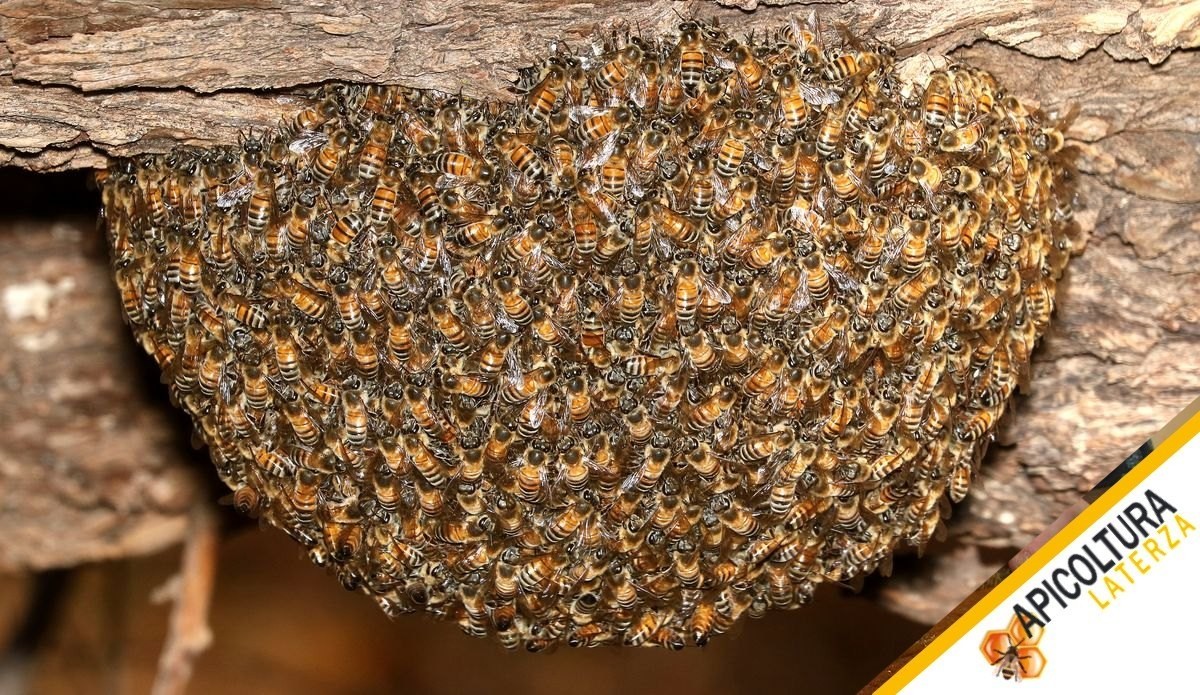
It happens, especially to those with few hives who cannot inspect often. If you see the cloud of bees rise and then gather into a cluster on a branch or a wall, that is the swarm at rest: the bees stay there a few hours, sometimes a day, while the scouts look for the new home.
That is the moment to recover it. A freshly issued swarm is usually docile, because the bees are loaded with honey and have no nest to defend. With a bait hive or a simple container it can be collected and put back into production. If the cluster is high or in an awkward spot, do not improvise: contact a local beekeeper.
Swarming is not a failure
It is worth remembering. A colony that wants to swarm is a healthy, strong, vigorous colony. The beekeeper's goal is not to repress that energy but to direct it: to turn the instinct to divide into new, managed colonies rather than into losses.
With a few inspections made at the right time and an eye for queen cells, spring stops being the season of fearing lost swarms and becomes the one in which the apiary grows, in an orderly way and under your control.
When you need one more colony
Sometimes, despite everything, a swarm leaves and a spot is left empty. Or you simply want to expand the apiary by riding the momentum of spring. In these cases starting from an established nucleus is the fastest and safest way to catch up.
At Apicoltura Laterza we prepare nucleus colonies and bee families with a queen already laying, ready to grow from day one. If you have lost a swarm or want to add a colony, tell us your situation and we will find the right solution.
In short
Swarming is a natural event that signals a healthy colony, but for the beekeeper it represents a loss if it is not managed. The key is to read the signals in time, first of all the queen cells on the edges of the frames, and to act through prevention: space, a young queen, regular inspections in the critical period.
When the cells are already there, artificial swarming lets you split the colony yourself and gain a new nucleus. Handled this way, spring becomes the season in which your apiary grows, not the one in which you risk watching it fly away.
Lost a swarm? Start again from a ready colony
Nucleus colonies and bee families with a queen already laying, raised in our apiaries and ready to grow. Ideal to replace a swarm that has left or to expand the apiary in spring: tell us what you need and we will guide you.
In Same Category
- Water in the Apiary: Real Needs and Waterers That Actually Work
- Flowering Calendar: Planning the Year on Your Own Flight Radius
- Contract Pollination: How the Service Works for Growers
- Pollen and Propolis: What You Need to Harvest Them and When It Pays
- Urban Beekeeping: Rules, Siting and Good Neighbours for Keeping Bees in the City